
The Source Signals
Tech news is everywhere. Intelligence isn't.
88% of enterprise leaders say a data sovereignty failure could cost executives their jobs. 64% have no strategy to prevent one
Everpure's survey of 2,100 enterprises across eight countries finds data moving onto sovereign infrastructure at speed, while visibility, skills and board backing lag far behind the fear driving it.

ElevenLabs and DXC begin joint voice AI projects as enterprise buyers demand proof of return
ElevenLabs passed $500m in annualised revenue in May, and its valuation has risen from $100m to $11bn in under three years. DXC, now an investor, customer and partner, is using 90-day planning cycles to take its voice agents into banks, insurers and public sector clients.
Meta hires MongoDB chief CJ Desai to run new enterprise AI unit as MongoDB shares sink 25%
Zuckerberg calls Meta Enterprise Platform the company's next major business pillar, while MongoDB recalls former chief Dev Ittycheria hours before its Investor Day

A growing workforce now signs off on AI output it cannot question, change or refuse
The job of checking machine work has no name, no job description and often no stop button. Executives at Dataiku, DataRobot, CNTXT AI and Cloud Box Technologies discuss what the role costs the people doing it and what would make it fair.

A missed comma, a fake citation: the small AI mistakes professionals were never taught to catch
The AI errors that reach clients are rarely dramatic. They are small, tidy and easy to miss. Kurt Muehmel of Dataiku, Hassan Abu Sheikh of CNTXT AI and Catherine Bozhenko of DataRobot on why staff stop checking, how tools should be tested, and where the blame should sit.

Companies taught staff what AI can do and skipped the part where it gets things wrong
Employees were given powerful AI tools, a short training session and very little warning about when those tools fail. Leaders at Dataiku, DataRobot and CNTXT AI explain which mistakes get past people, why testing has to start long before launch, and who is responsible when the software gets it wrong.
Seagate testing shows hybrid storage cuts AI time-to-first-token by 95%
A joint white paper argues that AI agents stay fast when GPUs no longer have to remember everything themselves. The results are striking, and the conditions behind them deserve equal attention.

Desktop AI compute reaches 20 PFLOPS as GIGABYTE targets regulated data workloads
The AI TOP ATOM and W775-V10 give smaller engineering teams local access to Grace Blackwell compute without hyperscale cloud budgets.
77% of organisations have delayed AI infrastructure expansion over energy and sustainability concerns
Seagate's first global readiness report finds enterprises pulling back on expansion timetables even as data centre investment climbs the priority list.

Cloudflare turns OpenAI's GPT-5.6 Cyber on its own traffic data to write patches and block exploits mid-attack
Vulnerability Discovery and Remediation pairs code analysis from OpenAI's Daybreak models with live signals from a network handling trillions of daily requests, at a moment when disclosed flaws have already beaten last year's full-year total by a quarter.
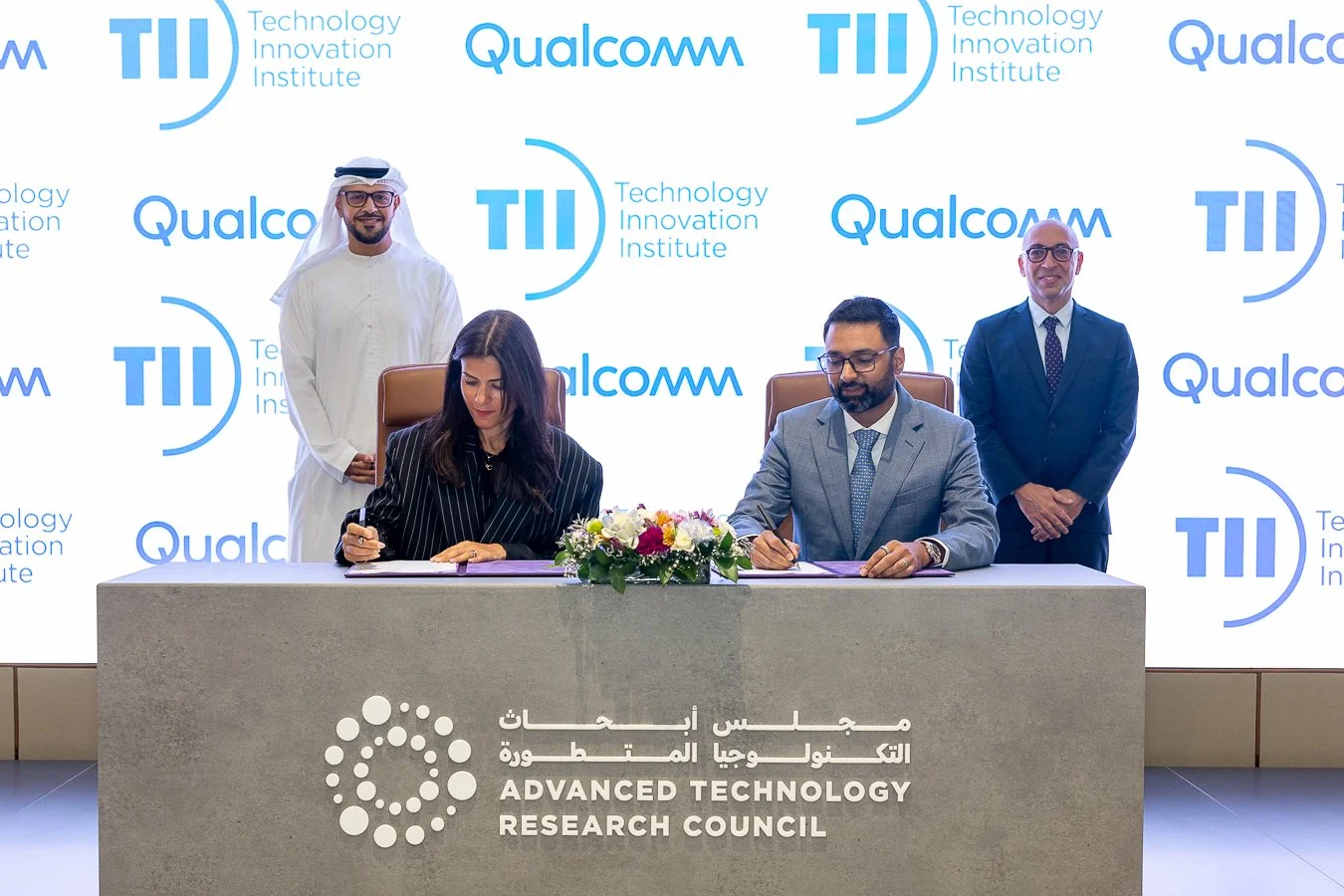
Qualcomm's first Tech for Good grant in the Middle East backs TII's onboard AI for cargo drones and air taxis
The grant funds work to run Abu Dhabi's SADEED diagnostics platform on Qualcomm's Dragonwing IQ9 processor, part of a wider global shift to move predictive maintenance out of the cloud and onto the aircraft itself.

AI optimism runs highest in the UAE, where 68% have already abandoned a brand over a digital experience
An Ipsos study of 4,047 consumers across four markets for Sitecore finds UAE respondents more receptive to AI in brand experiences than any other market surveyed, and quicker than most to walk away when an experience feels dishonest. Transparency, human access and demonstrated intent record the widest performance gaps everywhere in the data.
LEAP 2026: HUMAIN will replace Windows with its own oS on the Horizon Ultra in 2027
The Saudi company launched an AI PC with Qualcomm at LEAP 2026, running Microsoft software first and its own operating environment from next year.
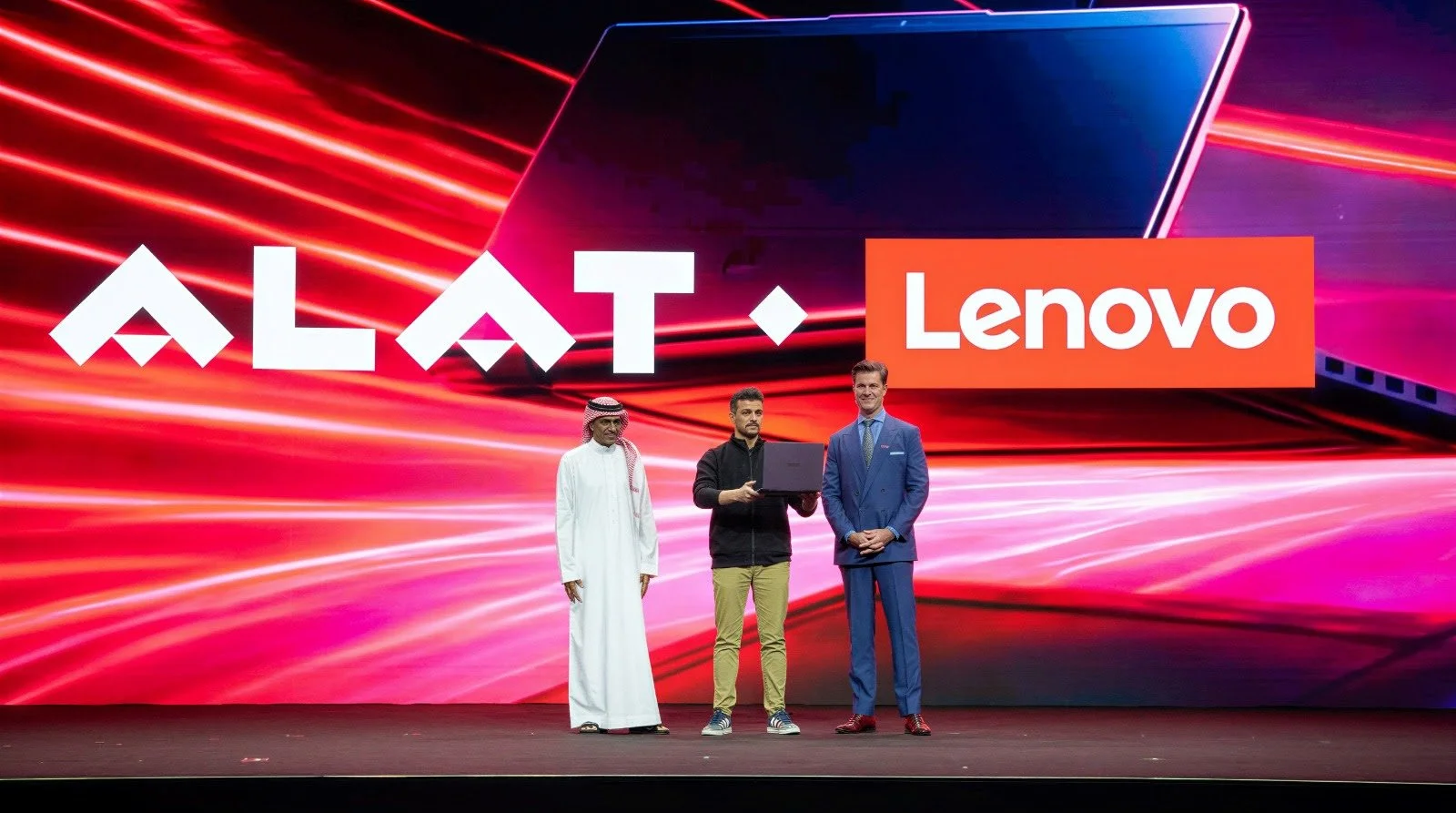
LEAP 2026: Riyadh became the first Lenovo site to build the company's full product range
The plant behind Lenovo's first Saudi-made laptop will produce PCs, desktops, Motorola smartphones and servers, a combination no other facility in its network of more than 30 sites handles.

LEAP 2026: Four rival chipmakers agreed to build Saudi Arabia's AI stack at once
Across four days in Riyadh, HUMAIN secured commitments from AMD, NVIDIA, Qualcomm and Cisco, and placed its Arabic language model in both Amazon's and Microsoft's catalogues. Assembling all of them in one week is the most instructive thing that happened at LEAP 2026.
SandboxAQ turns team chat into the shared workspace for AI agents with Switch
Switch connects agents built on Claude Code, Google ADK, LangChain and OpenAI into Slack, Microsoft Teams and Discord at no cost, under a licence that reserves commercial rights for SandboxAQ.

Mistral and HUMAIN sign sovereign AI deal worth hundreds of millions of euros
The Saudi collaboration covers infrastructure, Arabic-language models and regulated industries, and comes 13 days after Mistral locked five European industrial groups into multi-year compute commitments.

The AI dividend enterprise IT keeps promising has not turned up
New global research across 844 IT professionals records real productivity gains from AI in service management alongside a workload that has stayed flat or grown for seven in 10 teams. The measurement regime, not the model, explains most of the difference.
Agent sprawl drags enterprise workflow integration down 14 points
The share of organisations running AI-integrated workflows across business functions fell from 30% to 16% over the past year even as AI budgets grew 110%, according to ServiceNow’s third Enterprise AI Maturity Index.

AI is blamed for a quarter of all job cuts this year. The labour data cannot find the effect anywhere
Over-hiring during the cheap-money years and ordinary margin pressure are being consolidated into a single flattering story about operating at the frontier, and almost nobody outside the company can check it.