
From Pit Wall to Production Line: Confluent’s F1 Experiment
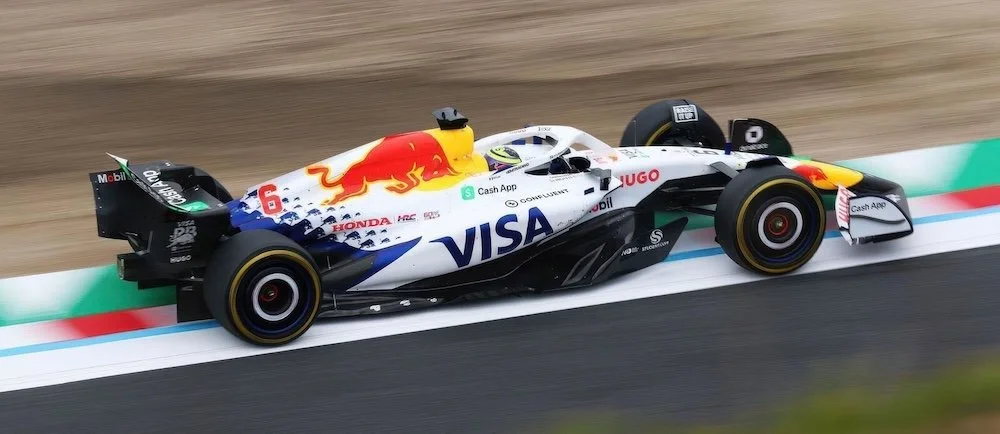
When the RB car rolls out of the garage in Abu Dhabi, cameras follow the livery. Inside, engineers follow the numbers. Before the out-lap ends, the vehicle is already talking: hundreds of telemetry channels stream off the chassis, through antennas and cables, to the pit wall, the garage, and back to base in Europe.
Ride height, brake temps, tyre pressures, engine modes, battery deployment - every subsystem turns the lap into data.
For Visa Cash App RB, that stream is no longer just a jumble of feeds across different tools. It is now considered a product in its own right - something you can route, replay, process, and reuse across race engineering, R&D, and eventually, road-car work.
That’s where Confluent fits in: the unseen layer connecting car, pit wall, and factory, transferring telemetry from the car to edge devices, to the cloud, and back again, fast enough for a race engineer to decide before the driver reaches the next corner.
The New Arms Race: Milliseconds Under a Cost Cap
Formula 1 has always been a science experiment disguised as sport, but the cost cap has turned it into pure optimisation. Everyone spends roughly the same. The edge comes from how intelligently you turn dollars into lap time, and how ruthlessly you squeeze value out of data.
“There’s a whole bunch of telemetry data that goes around in those vehicles, and you're optimising for the most finite improvement,” says Kamal Brar, Senior Vice President, Worldwide ISV and APAC, at Confluent. “They have a cost cap that’s the maximum number of dollars they can spend on their cars. And generally it’s margins of milliseconds in difference in terms of performance.”
“And so for them the use of any type of data analytics or any type of data that helps them improve their overall performance is critical to their overall, hopefully, position and ability to win the championship or the race,” he adds.
“We are in the business of providing real-time data, which is why we've had the tag ‘data in motion’. They need the ability to make decisions, improve the vehicle's performance, fine-tune it and get it to a point of perfection where it fits into their cost structure, and of course have a differentiation which is not available to everyone else.”
“You really have to choose which technology can make a better impact - how can that drive hopefully to a result,” Brar says. Visa Cash App RB bets that real-time streaming infrastructure is one such technology.
How to Stream a Race Car
Confluent’s pitch sounds simple: move and process data in real time, wherever it lives. Doing that at more than 300 km/h, under F1’s rules and constraints, is the hard part.
We deliver in a hybrid scenario, and for us, edge means as close to the car as possible,” Brar says. “Ideally, that’s a microprocessor or edge node on the vehicle. It’s a common model: edge nodes on cars or devices, combined with on-prem and cloud.”
Brar explains the hybrid design powers real-time intelligence. The platform streams the data instantly, and Flink processes it on the fly. Flink is the analytics layer - crunching telemetry as it moves.
“We run Flink across the cloud and on-prem, which makes our architecture unique. On edge, we can’t afford even a millisecond of lag, or we risk losing connectivity; in the cloud, we can tolerate a second. That second won’t hurt reporting or deeper analysis,” says Brar.
That’s the pattern: edge and on-prem for decisions that touch the car; cloud for heavier reporting and analysis that can tolerate a second of latency. On a street track with flaky connectivity, the team leans harder on edge nodes. On a permanent circuit, it leans more on cloud workloads. Confluent’s job is to ensure it still appears as a single, continuous stream of data to the people making calls.

Kamal Brar, Senior Vice President, Worldwide ISV and APAC
From IPL to F1, and Beyond
The same architecture shows up outside F1. In the IPL, Confluent sits under the mobile viewing experience. “We think it's about a 17-minute engagement with a user on the phone, because you're not going to watch the whole match on the phone,” Brar says.
It's very unlikely unless you're travelling. But generally, you get 17 minutes of engagement. Within that time, how do you get the most personalised content? Someone might like to watch Kohli bat versus Dhoni, and then, of course, you can tailor your advertising or user experience in a very unique way. All of that data needs to be real-time. IPL, if you watch the T20S, they are so fast-paced that it wouldn't be relevant to serve data that isn't current.
R&D, Not Magic
Ask Brar what Confluent suddenly enables for a Formula 1 team, and he doesn’t pretend it’s a silver bullet.
“I would say it's not stuff they couldn't do before,” he says. “It's improving that entire process. We may drive cost efficiency. We may improve productivity for some of their engineering efforts.”
“The end goal here is to improve the cars and improve the overall R&D process and testing process for these vehicles,” he says. Confluent is plugged into that loop: faster data access, fewer manual hops, tighter feedback between race weekend and the factory.
“From our perspective, from Confluent’s standpoint, it's really around deployment of improving, we want to track and measure performance improvements or, for example, cost reduction in the entire process,” Brar says. “That's how we would consider ourselves successful as a metric.”
For now, all of that is internal. “So today, right now, it's just for the Visa Cash App RB car,” he says of the F1 work. “We haven't had any further explorative discussions of what else we can do.”
From Pit Wall to Production Line
To show where this architecture goes outside the paddock, Brar points to BMW. “BMW is one of our publicly recognisable customers,” he says. “Their entire ecosystem for maintenance, proactive maintenance of their vehicles and how they think about managing that with their consumer and improving that overall service quality relies heavily on real-time data.”
“That goes from not just delivering the vehicle but the entire experience. Was the first 10,000 kilometres smooth? Does your car need any proactive servicing? Was there a defect that needed to be called out? A lot of that information through the entire ecosystem - dealerships, delivery, user experience- relies on streaming data,” he says. “Connected cars are more connected than ever before, and that requires streaming data.”
In BMW’s case, Confluent underpins proactive maintenance, service quality and the connected-car experience. In F1, the same instincts show up as better test programmes, faster setup iterations and more informed decisions under time pressure.
It’s the same streaming mindset in two different environments.
On Edge, All the Way Down
As cars get smarter and more autonomous, the stakes for this infrastructure grow. Here, Brar is clear: critical decisions can’t afford a trip to the cloud.
Most of those decisions are actually made at the edge,” he says. “They can't rely on the cloud. A lot of that information stays on the edge and is processed by the computer or edge processor. It wouldn't make sense for those decisions to be made in the cloud or referred back.”
In that model, the cloud is for learning. “In the world of AI, everyone talks about frontier models, and where real-time makes a difference is around feedback loops. Constant feedback on the models, improving the models,” Brar says. The same logic applies to EVs and autonomous vehicles as to an F1 car: stream back performance data, software behaviour and edge cases, then fine-tune the system.
“Some of that requires learning from human-operated errors,” he adds. “When the cars get confused, what does a human do? Sometimes, if you're in one of those autonomous vehicles, you'll switch from automatic to manual and do something. They want to understand what happened, why it got into that position and how to avoid it. That fine-tuning process is where real-time streaming is critical.”
The Quiet Middle Layer of F1’s Future
Brar is also clear about Confluent’s position in the paddock. “As part of the partnership, we obviously are a sponsor of their car,” he says. “Visa Cash App RB - our branding is on their cars, the kit and so forth.”
The interesting piece is the layer beneath that branding. In a sport where regulations and spending caps constrain physical innovation, the remaining edge lies in decision-making: who can close the loop fastest between the car, the pit wall, and the factory, and then reuse those loops across production lines and connected-car services.
On any given weekend, that loop at Visa Cash App RB now looks like this: edge nodes as close to the car as the technical rules allow; Kafka topics moving telemetry into Flink jobs; engineers using those streams to refine setup and strategy; and a factory on another continent quietly learning from every lap. At the BMW scale, the same pattern runs through robots, paint booths, dealerships and service.