
Why 88% of satellite methane alerts get ignored, and how AIRMO plans to change that
Methane is the rare climate problem that comes with its own economic argument attached. It traps heat with far greater intensity than carbon dioxide; it clears from the atmosphere within about 12 years, where carbon dioxide lingers for centuries; and the gas escaping from valves and flare stacks is the same commodity the operator intended to sell.
Stopping a leak therefore protects revenue while it reduces warming, which is why the International Energy Agency, in its Global Methane Tracker 2026, calculates that around 70% of fossil fuel methane could be abated with existing technology. More than 35 million tonnes of it could be avoided at no net cost at all.
The abatement largely fails to materialise. The same International Energy Agency assessment puts methane from oil, gas and coal operations at 124 million tonnes a year and finds no sign the number is falling, despite mitigation pathways that are well known and proven across the sector. The obstacle lives in the accounting, where the industry reports its emissions using estimation factors that yield figures internally consistent with each other and disconnected from what is physically leaving the pipe.
“You can’t fix what you can’t measure, and right now methane is barely measured,” said Andrey Maksimov, Managing Director for MENA at AIRMO. “Companies run on estimates. When you actually measure, real emissions come out around 80% higher than what gets reported.”
Even seeing the gas has proven insufficient to close it. Although responses to the UN’s free methane alert system grew from 1% to 12% in a year, nearly 90% of over 3,500 leak notifications still go unanswered. The industry's main challenge is no longer detecting leaks - it's taking action once they are spotted. “A leak the size of a small power plant can stay open for weeks because nobody owns the fix,” Maksimov said.
Understanding that failure requires looking at what an operator is actually being asked to do. Acting on an alert means accepting an external number, assigning it to a specific piece of infrastructure, sending crews, halting production, and later defending the entire sequence to an auditor who was not there. A plume observed from orbit at coarse resolution, carrying a wide error margin and no clear attribution to a particular valve, gives an operator very little to act on and a great deal to dispute, and the incentives point towards inaction.
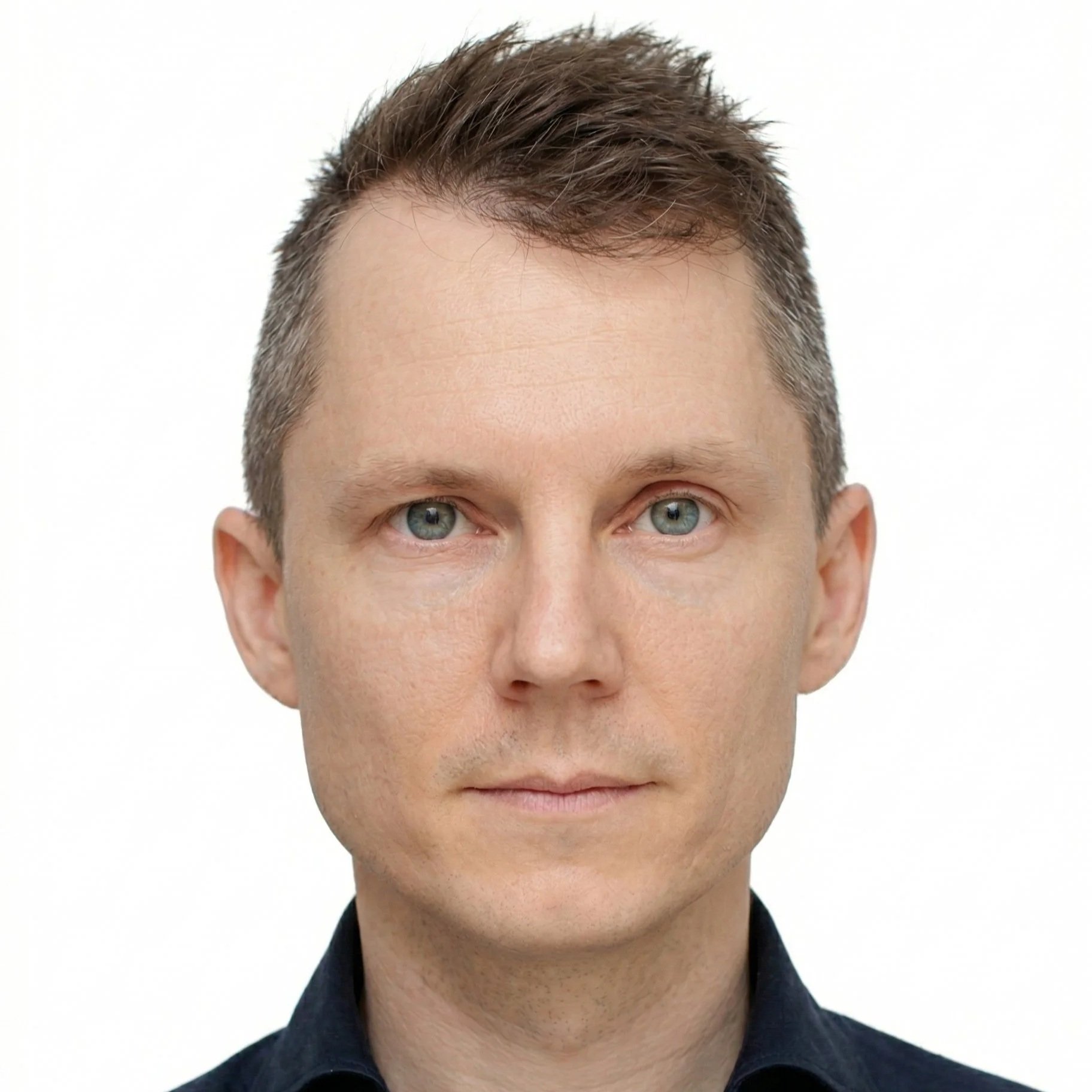
Andrey Maksimov, Managing Director for MENA at AIRMO
Building the instrument was the slow route, and the only one that produced a moat
Closing that gap requires a measurement robust enough to withstand scrutiny from three separate audiences with competing incentives. As Maksimov explained, "a measurement that a regulator, an auditor, and an operator all accept is a high bar." This is why AIRMO builds a full evidence trail into every measurement and proves its instrument on real industrial sites under uncontrolled conditions.
The examination the field treats as decisive is the one AIRMO submitted to with Saudi Aramco and King Fahd University of Petroleum and Minerals. “The hardest test in this field is a blind controlled release: someone releases a measured amount of methane without telling you how much, and you have to get the number right,” Maksimov said. Plenty of technologies detect methane, and considerably fewer will submit to being told afterwards exactly how wrong they were.
By the time Daria Stepanova founded AIRMO in 2022, reading methane from orbit had already settled into a software business. Public feeds from Sentinel-5P, Sentinel-2, Landsat and EMIT were free to anyone who wanted them, and companies including Kayrros had built commercial detection platforms on that data without owning an instrument in space.
Stepanova, a rocket scientist on her fourth company, began designing hardware, and her reasoning sits inside the physics of every methane satellite currently flying. Those satellites are passive, depending on sunlight bouncing off the Earth’s surface and inferring the gas from what returns. “Which means nothing at night, little through cloud, and a blurry idea of where the leak actually is,” Maksimov explained.
AIRMO’s answer was to stop waiting for the sun. “We bring our own light. Our micro-LiDAR satellites fire a laser and read what returns, so we can measure day or night, through weather, and point to the exact source,” Maksimov said.
Each property targets a specific reason operators dismiss alerts: continuous observation eliminates the excuse that a plume was a daylight artefact, weather penetration removes seasonal blind spots, and precise localisation turns a regional heat map into a work order for a specific asset.
Shrinking a laser and a short-wave infrared spectrometer onto an EnduroSat FRAME-15 platform, capable of roughly 50 meters ground sampling from 500 kilometres altitude, is a multi-year development effort. Maksimov made no effort to soften the trade-off. “Measuring gases from orbit with your own laser is genuinely difficult, and we chose to build the satellite rather than resell someone else’s data,” he said.
“That’s the longer road, and it’s the entire point.” The compensation is a defensive position no competitor can acquire commercially, since owning the chain from laser in orbit to final report “is not something a competitor can copy by buying a data feed,” he added.
Europe wrote a law that turned a voluntary number into a condition of market access
The economics of methane abatement have been favourable for years while producing very little abatement, which suggests voluntary logic was never going to be sufficient on its own. Regulation (EU) 2024/1787 replaced it with a legal obligation.
Enacted in August 2024, the law reaches far beyond Europe. By January 1, 2027, all EU oil, gas, and coal importers must prove their supply meets EU-equivalent monitoring standards or independently verified OGMP 2.0 Level 5—putting global exporters, including Gulf and Central Asian producers, on a strict deadline.
The oil and gas industry remains far behind on meeting upcoming emissions standards. According to a Wood Mackenzie report for IOGP Europe, global production reported at top-tier OGMP 2.0 Level 5 standards rose from 3% in 2024 to 7% in 2025. Certification body MiQ forecasts this will reach only 26% by 2027 - the exact year MRV equivalence rules become legally binding.
This large compliance gap shapes AIRMO’s target market and current business model. The company presently sells "measurement as a service” - surveying sites to deliver reports operators can hand directly to regulators, billed per project or through ongoing programs. Once AIRMO’s satellite constellation delivers continuous data, it plans to shift to a subscription model.
Selling a European instrument into Gulf energy required a second decision, and this one concerned geography. Deep-tech credibility travels poorly across regions where procurement runs on relationships and national operators buy from companies whose engineers they have met in person.
“We’re a European deep-tech company selling into the Gulf and Central Asia, where being on the ground matters more than a good pitch deck,” Maksimov said.
AIRMO registered AIRMO MENA at Hub71 on Al Maryah Island in Abu Dhabi, joining Cohort 16 of the ecosystem. This placed the company directly within the network of operators and regulators who determine how quickly this market moves. Its selection by Presight in June 2026 extended that reach into the main institution handling a large portion of the region's energy data.
Presight, which is majority-owned by G42 and listed on the Abu Dhabi Securities Exchange, evaluated 376 applications from 62 countries. It narrowed these down to a shortlist of 33 companies with a collective valuation exceeding $2.1 billion.
An eight-member jury drawn from Presight, the UAE Ministry of Industry and Advanced Technology, MBZUAI, G42, Shorooq Ventures, and K3 Ventures then selected the final 12 companies, including AIRMO.
The six-month programme provides participants with market access across Presight's and G42's partner networks, AI compute infrastructure, potential strategic investment through the Presight-Shorooq Fund, and up to 12 months of ongoing support after the main period ends.
Thomas Pramotedham, Chief Executive Officer of Presight, described the accelerator as a route to identify and scale AI innovations, bringing them directly into the company's ecosystem.
A satellite failure and a thinning field left an opening that capital noticed
Nine months before AIRMO closed its seed round, the sector lost its most celebrated asset. MethaneSAT, the Environmental Defence Fund satellite widely treated as the gold standard for the field, went silent on 20 June 2025 and was declared unlikely to be recoverable, 15 months into an intended five-year mission.
Speaking to the journal Science, Carbon Mapper Chief Executive Officer Riley Duren called the loss a substantial gap in the community’s ability to monitor and quantify methane emissions. What remains in the field is GHGSat’s constellation of small passive satellites, Carbon Mapper working with Planet’s Tanager-1, and the analytics companies reading public feeds, at a moment when research house IntelEvoResearch sizes methane detection and monitoring at USD 3.8 billion in 2025, rising to USD 8.9 billion by 2034.
Investors responded to that opening with capital. AIRMO closed €5 million in March 2026, led by Ananda Impact Ventures and joined by Unconventional Ventures, Kopa Ventures, Desai Ventures and Hypernova / New Venture Securities, alongside existing backers Antler, Findus Ventures, E2MC and Pi Labs, with EQT partners Matthias Fackler and Francesco Starace investing in a personal capacity.
The round followed a €5.2 million pre-seed in 2023 that included a €3.7 million European Space Agency contract under the InCubed programme, bringing the company to roughly €10 million raised.
Announcing the round, Stepanova described the objective as helping operators find and stop greenhouse gas losses, with an eventual ambition to monitor 12 million energy assets worldwide. Alina Bassi, Principal at Ananda Impact Ventures, described methane leakage reduction in the same announcement as the most effective route to decarbonising the energy industry today.
The first satellite goes up in 2027, the same year Europe starts demanding verified numbers from everyone who sells it energy. Whether AIRMO’s laser proves worth four years of instrument engineering depends on a question of institutional acceptance, which is whether a regulator in Brussels, an auditor in Abu Dhabi and an engineer at a Gulf gas plant all look at the same figure and agree to act on it.
