
Why a six-clinic UAE sports medicine group is betting its next chapter on the female-athlete data gap
Dr Anna Zickerman has run UPANDRUNNING Sports Medical Center as its sole owner since 2010, scaling the business from a single consulting room into a six-clinic group that has treated more than 65,000 patients without taking on any external investment, and she is now, for the first time, looking for a funding partner to carry the company through its next phase of growth.
The decision marks a deliberate shift for a founder who spent more than a decade guarding full control of a brand she built in a category that did not exist when she started.
When Zickerman returned to the Emirates after completing her medical training and fellowship in the UK and Ireland, integrated sports medicine was not an established discipline in the region, and neither patients nor insurers had a working understanding of what it was or what it could deliver. She had grown up in the UAE and understood the population and the culture, and she could see a clinical gap wide enough to build a career inside.
The institutional scaffolding that would have made that straightforward simply was not there, because the Dubai Health Authority was still evolving, no licensing category matched what she wanted to build, and the early work was as much regulatory advocacy as it was medicine. “When I returned, there were no female leaders in this space and no established category for sports medicine in the UAE,” she said, describing endless regulatory visits to justify new licences and push against advice that the model would never work.
What changed the landscape was demand she did not have to manufacture, because as professional athletes and European teams began recognising Dubai as a winter training destination, investment followed into the dedicated facilities needed to host them, and UPANDRUNNING positioned itself as the medical and rehabilitation layer underneath that shift. Local athletes, the large expatriate population, and the recreational players Zickerman calls weekend warriors followed the elite clientele, and a discipline that had no commercial definition acquired credibility.
The intellectual draw for her was always the point where science, performance, and prevention meet, and she has consistently argued that the best medicine keeps people active rather than repairing them once they are already broken, a philosophy that turned out to be commercially prescient as the wider market moved the same way.
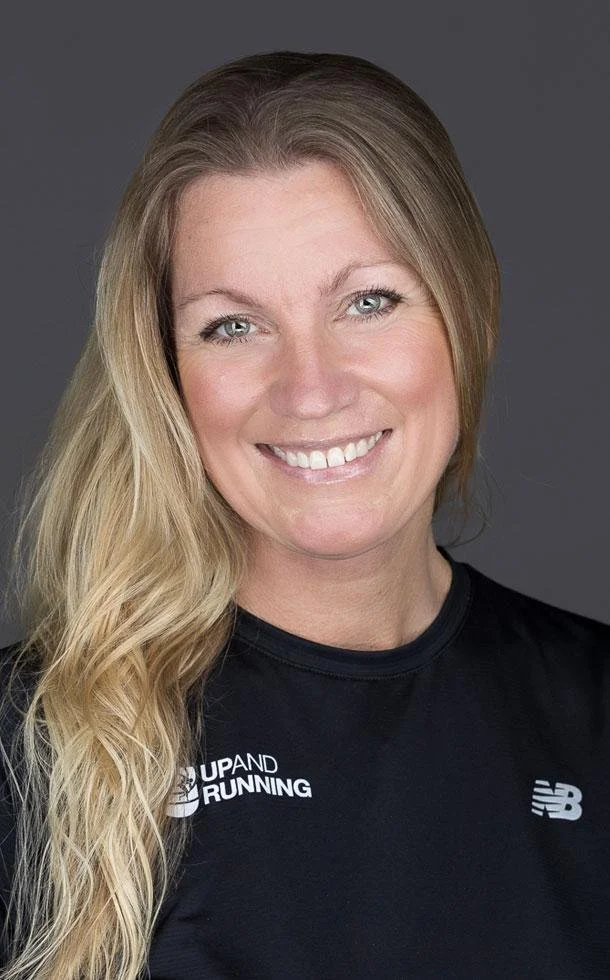
Dr Anna Zickerman
A market that finally caught up
The UAE healthcare sector is expanding at a projected compound annual growth rate of around 11% through 2030, supported by mandatory health insurance, sustained government spending, and a network of more than 150 hospitals and 5,000 healthcare facilities across the country.
The broader GCC health and wellness market, valued at $35.32 billion in 2024 by the iMARC Group, is forecast to reach $81.11 billion by 2033 at a CAGR of 9.7%, with growth driven by a structural pivot from treatment-based medicine toward preventive and performance-oriented care, alongside government programmes such as the Dubai Fitness Challenge and the National Sports Strategy 2031 that actively push participation.
Preventive sports medicine, the category UPANDRUNNING has occupied since before the market had a name for it, now sits at the centre of where the spending is heading. That tailwind does not erase the operational reality of running a clinical business, which Zickerman is candid about having underestimated, because the hardest recurring friction has not been competition or demand but reimbursement.
“Insurance remains the most underestimated challenge,” she said, pointing to a daily gap between what is clinically needed and what reimbursement models will cover, a gap that forces constant approvals and continuous education of both patients and insurers, and that fits preventive care particularly badly because the traditional insurance architecture was never designed around it.
Her answer has been to build a substantial private-pay layer, including performance assessments and run clinics, which insulates clinical quality from commercial pressure and gives the group operational freedom a purely insurance-dependent practice would not have.
When the product is a person
The defining difficulty of growing a clinical group, in Zickerman's account, is that the product is the clinician, which means quality cannot be replicated at will, and every hire either protects or erodes a reputation built over years.
“Scaling a clinical business is unique because the product is the clinician; you cannot simply replicate quality at will,” she said, and recruitment across multiple locations and disciplines has remained one of the most demanding parts of the operation.
The point is more than operational philosophy, because she has stepped back into the chief executive role specifically to correct management failures where she had delegated too much trust, and she describes mistakes around employee autonomy that cost a small fortune and damaged her quality of life.
The decisions she values most, on reflection, were the ones that deepened clinical capability through specialist hires and diagnostic technology rather than simply adding headcount, on the reasoning that clinics can open and close but reputations take decades to build and are almost impossible to rebuild once lost.
Credibility that cannot be marketed
That reputational moat is, in competitive terms, the asset that distinguishes UPANDRUNNING from a market increasingly crowded with general orthopaedic and physiotherapy providers chasing the same insurance-funded demand.
Zickerman's years in elite sport, including medical leadership at the DP World Tour, function as a credibility engine that marketing cannot manufacture, and she is explicit that the standard does not bend between a touring professional and a recreational patient.
“Elite credibility powers our referrals and attracts top talent, something that cannot be faked through marketing,” she said, adding that the high-pressure environment of tour care, where athletes' livelihoods depend on fast and accurate decisions, sharpened a level of triage and rigour that now applies to every patient through identical treatment pathways.
The data gap around female athletes
The most strategically interesting part of the business sits in its newest service line, because UPANDRUNNING's Elite and Recreational Athlete Assessments grew out of a pattern Zickerman kept seeing, in which patients, and women in particular, presented with fatigue or recurring injury while standard clinical pathways failed to ask the right questions about iron deficiency or hormonal fluctuation.
“We repeatedly saw patients, particularly women, presenting with fatigue or recurring injuries where standard clinical pathways failed to ask the right questions,” she said, describing a system that was never designed around the female athlete in the first place.
That observation aligns with a well-documented global research deficit, in which female athletes receive limited focus in sports medicine and performance science, protocols are still frequently derived from male-dominated data sets, and, by the count of Women's Health, Sports & Performance Institute co-founder Dr Kate Ackerman, less than 10% of sports medicine research has focused on women's bodies.
A $50 million research institute launched around the 2026 Winter Olympics to address exactly that gap is evidence the field is finally moving, and Zickerman's clinic has been treating it as a clinical priority and a commercial opportunity simultaneously.
Because the testing sits outside the insurance framework and is paid for directly by patients who recognise the value of objective physiological data, it shifts the clinical conversation from symptom management toward performance optimisation and, in doing so, builds a longer-term relationship with each patient that a one-off injury consultation does not.
For a group seeking outside capital, a high-margin, private-pay, data-led service line that deepens patient retention is precisely the kind of asset that makes a clinical business investable rather than merely profitable, and it gives Zickerman a defensible position in a segment most competitors have not seriously entered.
What she is looking for now
What she is looking for now is a partner rather than simply money, and she frames the search around protecting what the brand has come to mean. Having reached a point where her own breadth across every part of the business has become a constraint on its growth, she has concluded that UPANDRUNNING needs both funding and an aligned partner to flourish.
“For UPANDRUNNING to truly flourish, we need funding and a partner who understands our vision and values our reputation,” she said, an unusually specific requirement from a founder who has spent fifteen years remaining accountable to no investor precisely so that the brand would not be compromised by the wrong one.
Over the next five years her stated ambition is to keep growing a world-class integrated service, and having treated more than 65,000 patients since 2010, she has positioned the credibility she built without capital as the thing capital will now be asked to scale.
