
Inside the UAE's Digital-Assets Build Phase: Fuze Chief Strategy Officer Serena Sebastiani on What Speed and Ambition Actually Required
Serena Sebastiani remembers the summer clearly. Early in her consulting career at PwC, she and her team spent months working day and night, supporting a regulator in the authorisation of what was then considered one of the most prominent players in the digital assets industry. The scrutiny was intense, the responsibility shared, and the belief — genuine on all sides — was that they were helping shape the future responsibly. A few months later, without warning, the firm collapsed.
It is the kind of moment that ends careers, or at least redirects them. Sebastiani stayed, and more than that, she drew the lesson forward and built from it. Trust, she concluded, is not a soft value in finance — it is the hardest infrastructure there is. "Moments like that remind you how important trust is, especially in finance," she said. "But crises are also accelerators of maturity." Today, as Chief Strategy and Venture Officer at Fuze, a digital-assets infrastructure company headquartered in the UAE, she is doing what she has always done: building the layer underneath the layer, the plumbing that makes everything else possible.
Where strategy lives
Fuze sits in what the industry calls the plumbing layer: the API rails, liquidity infrastructure, and compliance architecture that underpin the digital assets products most people interact with without ever seeing. The company is designed to be foundational rather than visible, and Sebastiani's role reflects that same orientation. "Strategy is often mistaken for abstraction," she said. "In reality, it is about defining the path a company commits to, and most importantly, the paths it refuses."
Day-to-day, her influence runs through market expansion, regulatory posture, institutional partnerships, and risk appetite. She describes herself as a translator: between the speed of crypto-native teams and the patience of bank-grade governance, between entrepreneurial ambition and the hard evidence a regulator needs to see across a table. That translation work, she is clear, is never a solo effort.
"Profound alignment within the leadership team allows us to define the ambitions and directions of the company as complementary pieces of a puzzle," she said. "My role is coordinating all this and translating it into a clear path."
The company's Chief Executive, Mo Ali Yusuf, has described Fuze's mission as providing enterprises with a future-proof platform that powers all digital-asset products through a single API. Sebastiani is, in large part, the person who converts that ambition into the institutional credibility required to sustain it. "In infrastructure businesses," she said, "credibility is control."
The cost of trust, and its value
The collapse she witnessed early in her career did not just disrupt a company — it disrupted an entire market. Banking clients who had been cautiously considering entry into digital assets withdrew overnight, and the confidence built over years of regulatory dialogue evaporated within weeks. "It almost felt delusional," she said of her own position at the time. "But I was disciplined and optimistic enough to apply the lessons learned and to persevere."
What followed was an industry forced to grow up. Regulatory frameworks tightened across jurisdictions, supervision became more sophisticated, and the guardrails that had once seemed like friction were revealed, in their absence, to have been load-bearing all along.
"This actually supported the industry to grow, to innovate, to align with global standards, to be conscious of customer protection," she said. The lesson she carried forward was structural: in a trust-dependent business, compliance is not an obstacle to speed — it is the condition for it.
That discipline now shapes how Fuze operates in the OTC market, where, in practice, it means conservative risk management, rigorous client onboarding, and the willingness to decline flows that are profitable but carry reputational risk. "It means building meaningful relationships with your clients, acting as a partner and a thought leader," she said. "And having a plan B and C, and many contingencies in case of market disruption."
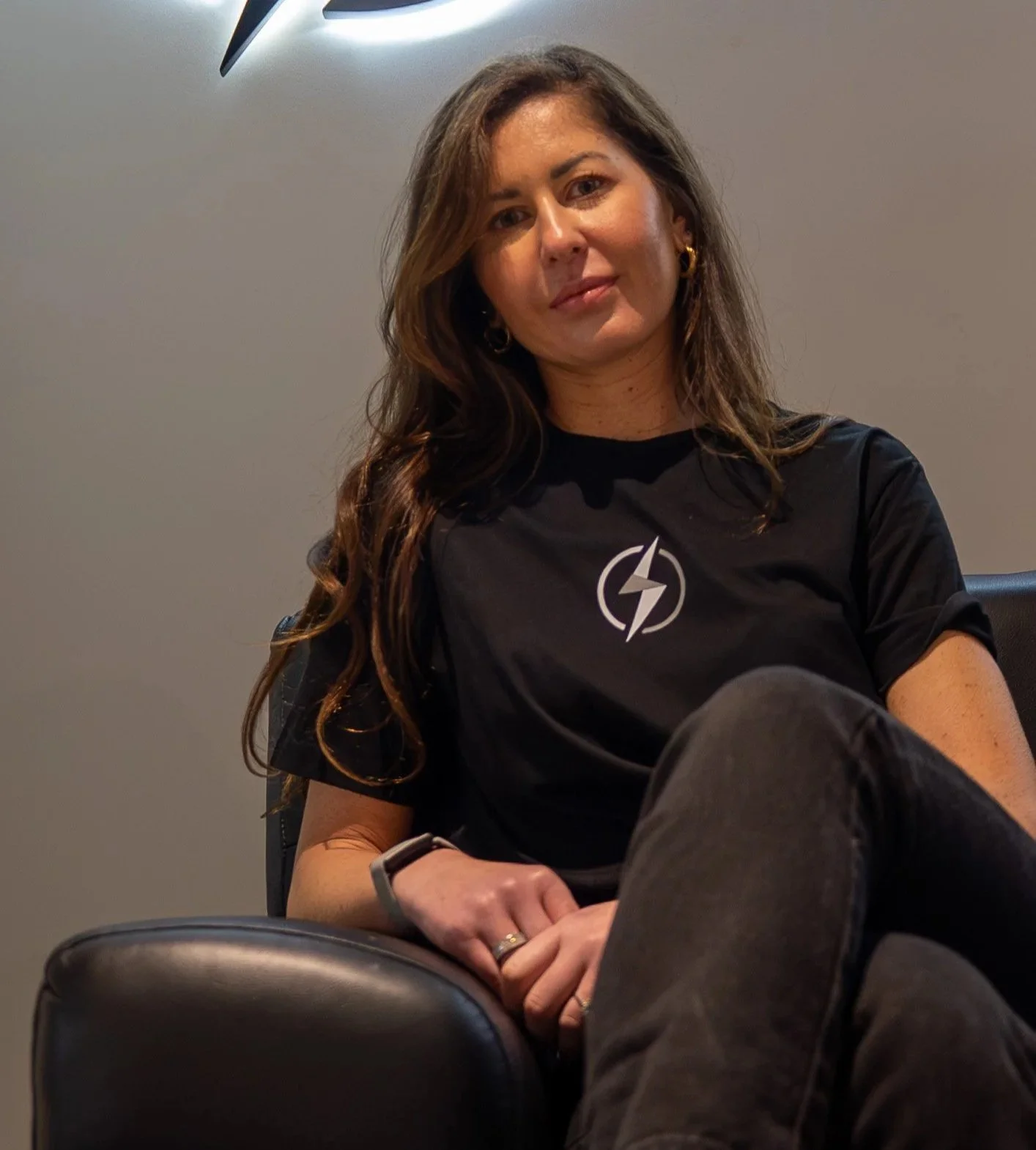
Serena Sebastiani, Chief Strategy & Venture Officer
Building on green fields
Sebastiani arrived in the Middle East during what she calls the build phase, a period when it was still possible to construct on green fields, when the regulatory frameworks were new, the talent ecosystem was forming, and the choices made would shape the industry for a generation. The region's digital assets story is typically told as one of speed and ambition, but she is careful to reframe what that actually required. "Few understand how intentional this is," she said. "This is about thinking in generational horizons, not about next week's headlines."
The proof, for her, is in the talent. What was once scarce in the region is now abundant, as some of the world's most experienced operators have relocated here, drawn by deliberate policy choices around education, ease of doing business, and quality of life. Ecosystems, she observed, follow talent faster than headlines suggest. Her own regulatory work has included contributions connected to the establishment of the Virtual Assets Regulatory Authority, the UAE's dedicated supervisory framework for the sector, and she is characteristically measured about what that work actually involves. "Outside the room, regulation can look conservative and sometimes annoying," she said. "Inside the room, you understand the work that goes into building the trust we have now, which allows serious capital and Wall Street bulls to participate in the digital assets space."
A decade before Fuze, Sebastiani was part of the European Union's Target2Securities project, building the settlement infrastructure layer for cross-border securities clearing across European Central Securities Depositories — the institutions responsible for holding securities and maintaining the official record of ownership. The focus was Delivery versus Payment, a settlement mechanism that ensures securities and cash are exchanged simultaneously, eliminating counterparty risk, and the work was the kind that rarely earns headlines but underpins everything that does.
The parallel to her current work at Fuze is one she draws readily. "Resilient infrastructure makes everything else possible," she said. "Different context, same story." What has changed across 15 years, she said, is that value can now move with speed and programmability in a common language — something that was technically impossible when she began her career. What has not changed is the centrality of the connector, the layer that enables that speed while absorbing complexity. At Fuze, the hardest friction in building that layer is, she insists, never technological. "Friction usually lies in the alignment," she said. "We are an ecosystem, and ecosystems function as a team sport. If one fails, everybody gets hit."
On labels, and what she refuses
Sebastiani sits on the board of the Association for Women in Crypto, a network focused on mentorship and access in an industry where both have historically been unevenly distributed. She sees genuine value in what such organisations do, particularly in geographies where visibility for minorities remains limited, but she is precise about where her endorsement ends. "I don't believe in labels, including 'women in crypto,'" she said. "I prefer to be measured and appreciated, or not, by the quality of my thinking, my leadership, and the stories I help build."
The distinction she draws is between networks that create genuine access and a mode of leadership that reduces itself to representing a category — the former she supports, the latter she finds reductive. "Leadership is about delivering substance and leading by example," she said. "I never point out diverse leadership, but rather how seriously we all operate in the industry."
The consulting training is still visible in how she works: the capacity to bring order into messy environments, to align teams around a shared objective, and to pursue it without relenting. What she had to unlearn was the instinct to perfect the plan before moving, the consulting reflex toward completeness over momentum. "In operating roles, especially in fintech, progress is rarely linear," she said. "You need clarity of direction, but you must start executing while you plan and continuously adapt to what you learn. It's okay to change your mind. It helps you stay relevant."
One thing she is certain will not change, regardless of the velocity of the technology around it, is human behaviour — the fears, the trust, the incentives and relationships that have always driven how money moves and who it moves for. It is, she said, just beautiful, and she hopes artificial intelligence leaves it alone.
