
Nutanix ECI 2026: Enterprises Are Racing to Deploy AI, but Most Admit Their Infrastructure Cannot Keep Up
There is a widening gulf at the heart of enterprise IT. Organisations worldwide are charging ahead with artificial intelligence, deploying AI-enabled applications, experimenting with autonomous agents, and containerising their software estates at record pace. Yet an overwhelming majority concede that their infrastructure is simply not ready for what comes next.
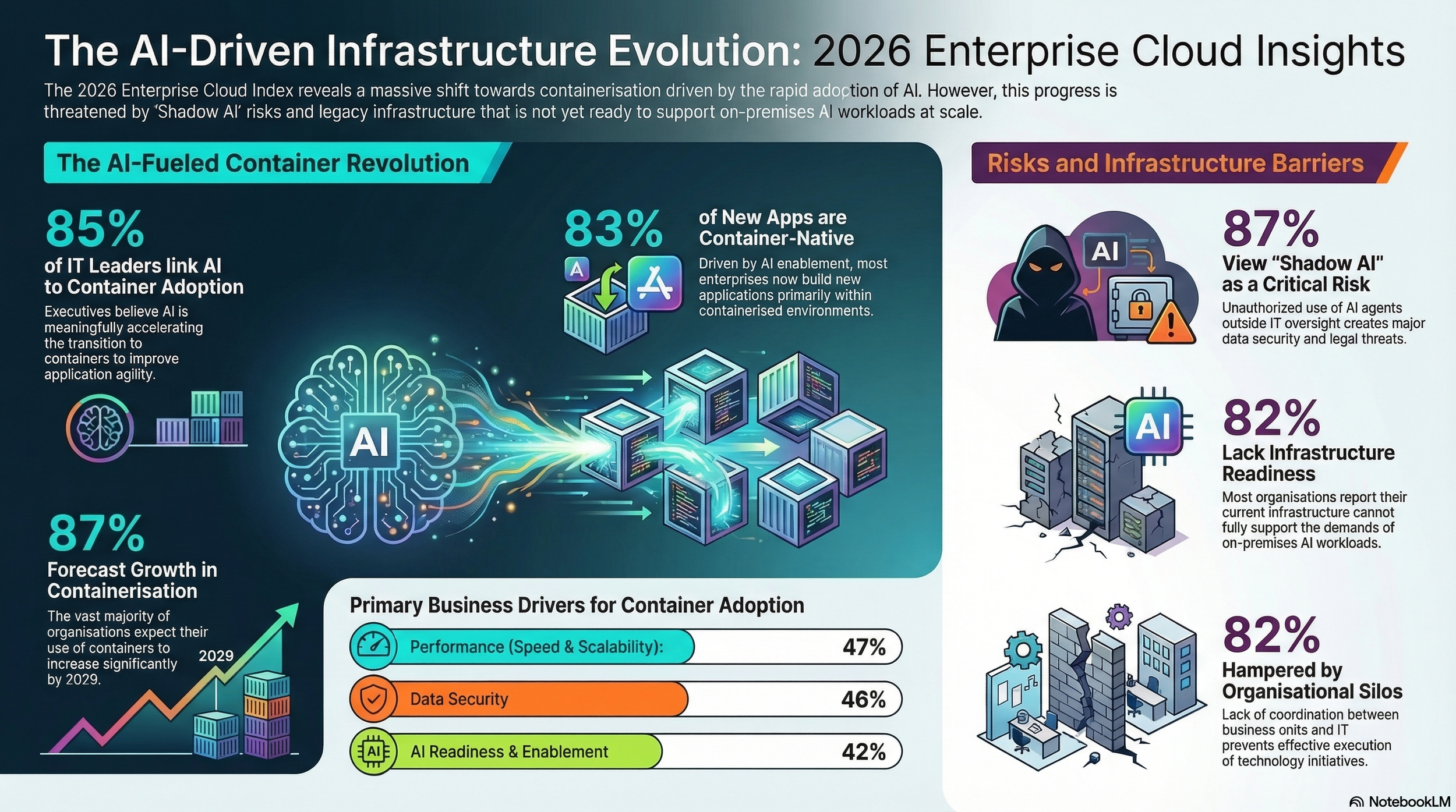
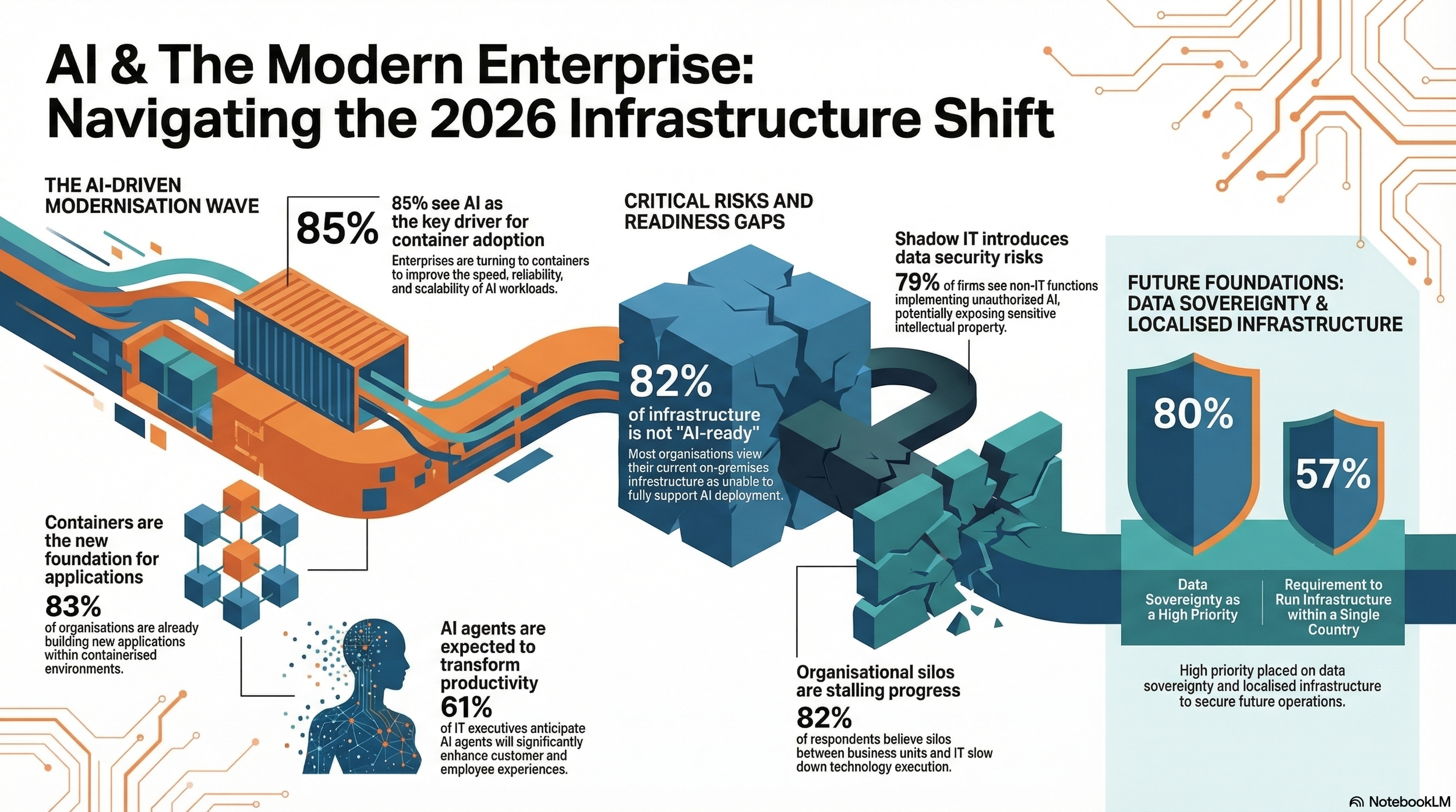
That is the central finding of the 2026 Nutanix Enterprise Cloud Index (ECI), a global survey of 1,600 senior IT, cloud, and engineering leaders conducted by Wakefield Research in November 2025. Now in its eighth year, the report delivers a sobering counterpoint to the prevailing optimism around AI: 82% of respondents acknowledge that their current on-premises infrastructure is not fully equipped to support AI workloads. At the same time, 59% expect their organisation to run more than five AI-enabled applications within three years.
“The findings indicate organisations need enterprise-grade security, resilience, and portability as AI workloads can run anywhere,” said Lee Caswell, SVP of Product and Solutions Marketing at Nutanix. “Organisations would also benefit from a common operating environment for virtual machines and containers that enables their IT leaders to scale AI confidently across hybrid environments.”
In short, the appetite for AI has vastly outstripped the enterprise’s ability to serve it. And the pressure to close that gap is mounting from every direction.
From strategy to execution: a year of rapid acceleration
To appreciate the pace of change, it helps to look at where things stood just twelve months ago. The seventh annual ECI, published in 2025, found that 85% of organisations already had a GenAI strategy in place, with 55% actively implementing it. Only 2% had not begun planning. The top business goals supported by generative AI were increased productivity (57%), greater automation and efficiency (51%), and accelerated innovation (49%). Customer support and experience was the most widely deployed GenAI use case, with 53% of organisations leveraging it.
Yet even as strategies took shape, the 2025 report flagged serious execution challenges. A striking 98% of organisations reported difficulties scaling GenAI workloads from development into production. The single greatest obstacle was integrating AI with existing IT infrastructure, cited by 54% of respondents. Close behind were skills shortages (53%), cost-of-ownership concerns (52%), and regulatory hurdles (48%). Investment priorities reflected these pressures: IT infrastructure (54%) and IT training (52%) topped the list of areas needing further funding to support GenAI.
The 2025 survey also revealed that 90% of respondents expected IT costs to rise due to GenAI and modern application implementations. On the question of return on investment, expectations were cautious: 42% anticipated breaking even or making a loss on GenAI projects within the first year. Only over a two-to-three-year horizon did 70% of organisations expect a positive return, suggesting that most were budgeting for a GenAI payoff around the 2026–2027 timeframe.
Notably, the CTO (61%) and CIO (48%) were far more likely than the CFO (19%) to hold ultimate responsibility for GenAI budgets and implementation, suggesting that these initiatives are being driven by technological ambition rather than pure financial calculus.
What the 2026 report reveals: ambition meets reality
Fast forward to the eighth annual ECI, and the picture has sharpened considerably. The strategies that organisations were formulating a year ago are now being tested in production, and the growing pains are real.
Shadow AI: the fastest-growing risk nobody budgeted for
Perhaps the most striking revelation is the scale of unsanctioned AI activity across the enterprise. Seventy-nine per cent of respondents say they have encountered AI applications or agents being deployed by employees outside IT functions. And 87% believe that this unauthorised use introduces tangible risk, from the exposure of sensitive data and intellectual property to compliance violations that could carry serious regulatory consequences.
This is shadow IT reimagined for the generative AI era. Where previous waves of unsanctioned technology adoption involved employees signing up for cloud storage or messaging platforms, today’s shadow AI involves staff deploying intelligent agents and large language model-powered applications that can ingest, process, and potentially leak proprietary information at scale. The survey findings underscore an urgent need for closer collaboration between IT teams and business stakeholders to ensure that AI deployments remain secure, compliant, and aligned with organisational goals.
The 2025 report had already signalled the potential for this problem. It found that platform engineering and DevOps teams perceived themselves as further along in GenAI implementation than their IT counterparts, with a 10-percentage-point gap in perceived progress. In some cases, these teams were deploying AI solutions without the knowledge or support of centralised IT. The 2026 data confirms that this pattern has now spread well beyond technical teams and into the broader business.
Organisational silos are compounding the problem
Shadow AI does not emerge in a vacuum. The 2026 report reveals that structural disconnects within organisations are creating fertile ground for ungoverned technology adoption. Eighty-two per cent of respondents say that silos between business units and IT make it difficult to execute technology initiatives effectively, slowing deployment timelines and layering on complexity.
When business teams cannot get the tools or the speed they need from centralised IT, they build or buy their own. The result is a fragmented landscape of AI projects that may individually deliver value but collectively introduce inconsistency, duplication, and risk. Last year’s ECI identified a related disconnect: C-level executives were 12 percentage points more likely than other seniority levels to believe that all their applications were fully containerised, suggesting a persistent gap between leadership perceptions and on-the-ground reality. Bridging these silos is no longer merely an operational improvement; it is a prerequisite for safe and effective AI at scale.
Containers become the default, with AI as the accelerant
On the infrastructure side, the 2026 report confirms a decisive shift towards containerisation. Eighty-seven per cent of respondents expect the use of containers for applications to increase over the next three years, and 83% say they are already building new applications in containers. The driving force behind this trend is unmistakable: 85% of those surveyed report that AI is directly accelerating their adoption of containerised workloads.
This builds on the trajectory charted in the 2025 ECI, which found that 54% of organisations had already fully containerised their application estates, both legacy and newly developed. At that time, 98% of organisations were at least in the process of containerising, and 70% said they would containerise their GenAI applications, making generative AI the top category for containerised workloads. Nearly 80% of organisations were running more than one Kubernetes environment, with most using two or three.
However, the 2025 data also revealed persistent challenges. Some 81% of respondents said their IT infrastructure needed improvement to fully support cloud-native applications and containers, and 64% found container-based application development itself challenging. More than a third (36%) felt they lacked the necessary skills. The 2026 findings suggest that while containerisation has continued to accelerate, these underlying challenges around infrastructure fitness, skills, and complexity remain very much alive.
AI agents: enormous promise, careful governance required
The 2026 survey also captures growing optimism around AI agents, the autonomous or semi-autonomous systems that can act on behalf of users and organisations. Sixty-one per cent of IT executives expect AI agents to enhance customer or employee experiences, and 58% anticipate gains in productivity and efficiency. A further 57% see potential for agents to create entirely new products, services, or revenue streams.
These figures suggest that the conversation around AI in the enterprise has matured beyond simple automation. Leaders are beginning to envision agents that do not merely assist but actively drive business outcomes. The 2025 report had already noted that organisations planned to shift their GenAI focus towards cybersecurity, fraud detection, and loss prevention over the coming one to three years. AI agents represent a natural evolution of this ambition, moving from task-specific tools to systems capable of independent judgement and action. Yet this only heightens the stakes around governance and infrastructure readiness.
Data sovereignty remains non-negotiable
Amid the rush to modernise, organisations are not losing sight of where their data physically resides. For 80% of respondents in the 2026 survey, data sovereignty is a high priority when making infrastructure decisions, including where to deploy containers. Compliance obligations frequently require organisations to keep data within the borders of the country where it was collected, and more than half (57%) feel the need to run their infrastructure within a single country, whether on-premises or through a local cloud region, driven primarily by security and data protection concerns.
This echoes the emphasis on data security and privacy in the 2025 report, where 95% of respondents agreed that GenAI was changing their organisation’s priorities, with security and privacy as a primary concern. Over 90% said data privacy was a priority when implementing GenAI solutions, yet a near-identical proportion (95%) believed their organisation could be doing more to secure its GenAI models and applications. The 2026 data on sovereignty suggests that as AI workloads become more distributed, the question of where data sits has become just as critical as how it is protected.
This finding has particular resonance across the Middle East and Africa, where regulatory frameworks around data residency are evolving rapidly. Mohammad Abulhouf, VP and GM for the Middle East and Africa at Nutanix, offered a regional perspective.
“Across the Middle East and Africa, we’re seeing AI adoption move from experimentation to execution, but many organisations are trying to move faster than their infrastructure and operating models allow,” he said. “The findings of this year’s Enterprise Cloud Index highlight a clear priority for the region: modernising platforms with containers while maintaining strong governance, data sovereignty, and security. To scale AI safely and confidently, organisations need a consistent, enterprise-grade foundation that brings IT and the business together across hybrid and multicloud environments.”
The hardware question and the ROI reckoning
Infrastructure readiness extends beyond software architecture. The 2025 ECI found that only 60% of organisations had a concrete plan for GenAI-specific hardware such as GPUs, APUs, and TPUs. The remaining 40% were still investigating their options. With 82% of 2026 respondents viewing their on-premises infrastructure as not fully ready, the hardware dimension of AI preparedness clearly remains unresolved.
The financial picture adds another layer of complexity. Last year, 52% of organisations identified cost of ownership and ROI visibility as a challenge when scaling GenAI workloads. While 70% expected a positive return within two to three years, the 2026 directive to deploy AI applications is coming from the very top of organisations, which will only intensify pressure on IT teams to deliver results within tightening timescales.
The readiness gap: closing it is a strategic imperative
The tension between aspiration and preparedness runs through both the 2025 and 2026 reports. Caswell’s call for a common operating environment for virtual machines and containers speaks directly to this challenge. Without a unified platform that spans on-premises, cloud, and edge environments, organisations risk building AI capabilities on a patchwork of disconnected infrastructure that cannot deliver the security, resilience, or portability that enterprise workloads demand.
The 2025 report’s conclusion called for a holistic approach to application and infrastructure modernisation, urging organisations to prioritise security, foster talent, and embrace orchestration platforms like Kubernetes. It argued that the next frontier of innovation would be defined by an enterprise’s ability to integrate GenAI seamlessly into its broader IT ecosystem. One year on, the 2026 data confirms that the organisations heeding this advice are those pulling ahead, while those treating infrastructure modernisation as a back-office concern continue to fall behind.
What comes next
Taken together, the seventh and eighth editions of the Enterprise Cloud Index chart an industry at an inflection point. The building blocks of the AI-powered enterprise are being assembled: containers are becoming ubiquitous, AI agents are moving from concept to deployment, and organisations are investing heavily in modernisation. GenAI strategies that barely existed three years ago are now in active production.
But the foundations are not yet solid. Shadow AI is proliferating faster than governance frameworks can contain it, organisational silos are slowing progress, skills gaps persist, and the majority of infrastructure is not fit for the AI workloads that leadership is demanding. The 2025 report warned that 98% of organisations faced challenges moving GenAI from development to production. The 2026 data suggests that while awareness of these challenges has deepened, the structural barriers have not yet been dismantled.
For IT leaders, the message is clear. Closing the readiness gap is not simply a technical challenge; it is an organisational one. It requires breaking down silos between business units and technology teams, establishing robust governance for AI deployments, investing in both infrastructure and people, and building platforms that can support containerised and AI-driven workloads across hybrid and multicloud environments. The organisations that get this right will be those that treat infrastructure modernisation not as a back-office concern but as a strategic imperative at the very heart of their AI ambitions.