
Inside iCodejr’s Second Act: How a Dubai Edtech Startup Found Its True Market
Hannan Moti spent 13 years in banking – JP Morgan, Barclays, Trafigura – before an unexpected pivot to education. The shift began during a CSR programme at Barclays, where weekend teaching of digital literacy to low-income students revealed how far classroom tech lagged behind industry tools.
When he shared the experience online, Gems Education asked him to train their students. “That was the shock,” Moti says. “If even private schools needed help, the gap was bigger than a CSR project. Kids were still learning Microsoft Paint while the world talked about AI and ChatGPT.”
Across the GCC, governments were rolling out AI strategies and “future skills” agendas – yet in many classrooms, technology still meant a projector and a PowerPoint.
In 2021, Moti launched iCodejr to close that gap. The timing was critical: EdTech was booming, but most investment went to consumer apps and tutoring platforms rather than to infrastructure that schools could embed in their systems.
Act One: A Strong Start with Built-In Limits
iCodejr started with a familiar EdTech playbook: parent-facing online coding classes. In two years, it taught 800 students at about AED 400 per student per month.
The UAE’s after-school market is crowded with coding clubs and robotics camps, competing for the same weekend hours and discretionary budgets. It’s a lucrative space – the private K–12 market is worth over $10 billion and projected to reach $17 billion by 2030 – but growth is labour-intensive and constrained by parental price tolerance.
“We became cash-flow positive very early,” says founder Hannan Moti. “No bad debt, upfront payments, predictable lifetime value. But every time we grew by fifty students, we needed another instructor. That’s not scale – it’s treadmill growth.”
The challenge isn’t unique. Global STEM franchises boast presence in dozens of countries, yet their economics still hinge on filling centres and hiring instructors.
“We weren’t trying to be the fifteenth coding club,” Moti says. “We wanted systemic impact, not boutique impact.”
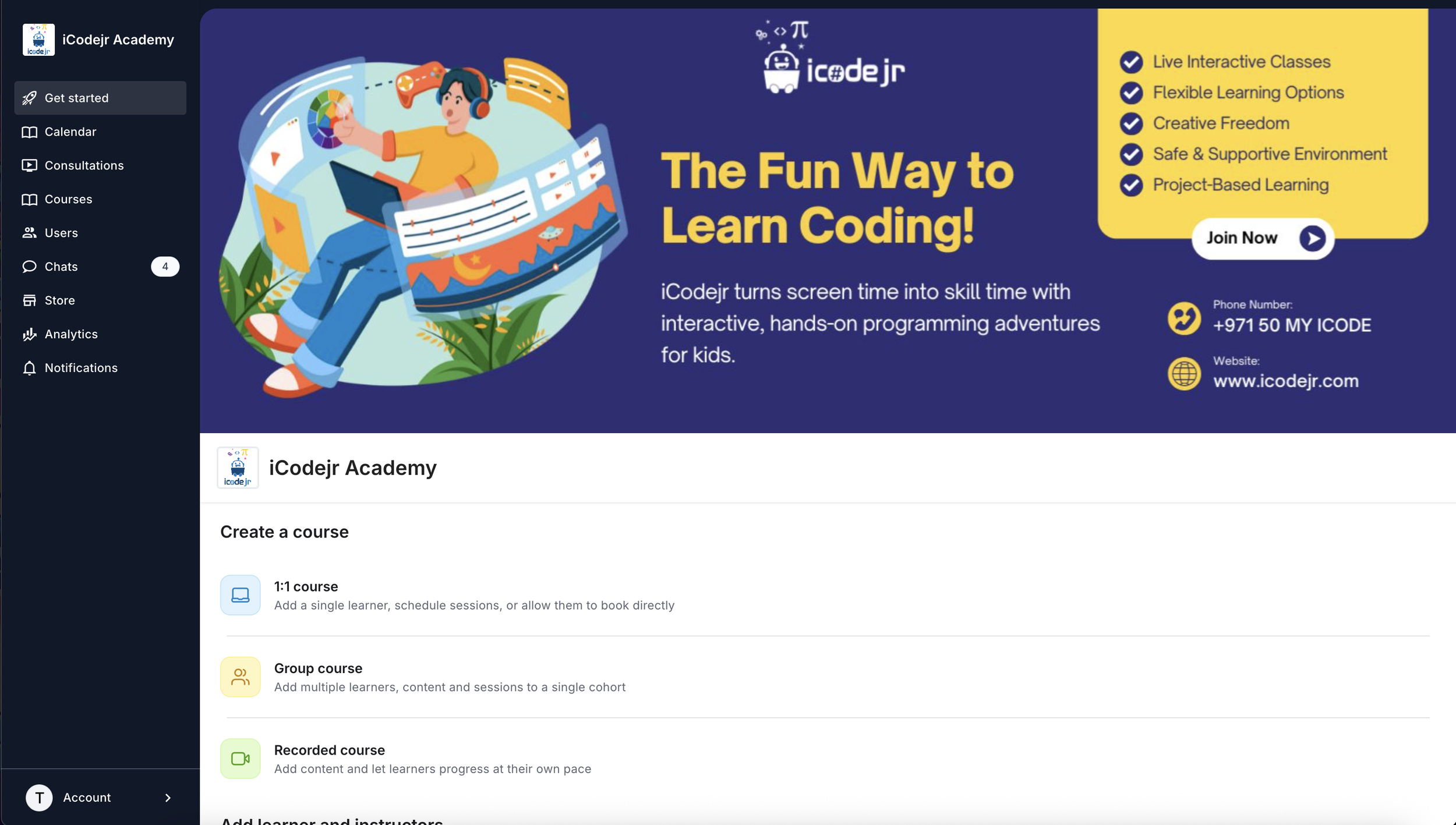
The learning mangagement system
The Pivot: A Hackathon That Changed Everything
The turning point came at iCodejr’s own event, Code Battle, now one of the UAE’s largest inter-school hackathons. Teachers admitted: “Our school doesn’t have a real STEM programme. We’re stuck teaching PowerPoint.”
That insight flipped the model. Instead of selling to parents, iCodejr began licensing its LMS, curriculum and teacher training to schools – meeting a clear demand for a ready-made STEM layer. Mid-market schools lacked the expertise and budget to build their own programmes, while regulators were raising the bar on innovation and digital literacy.
By aligning content with CBSE, IGCSE and IB frameworks, iCodejr offered schools a turnkey solution. Rather than asking parents for AED 400 a month, it tapped into schools’ improvement budgets – money already earmarked for better ratings and parent satisfaction.
Four schools joined initial pilots: Capital School, BC Academy, Pristine and Premier. Existing teachers delivered lessons via iCodejr’s platform, embedding STEM into timetables and replacing hundreds of individual parent sales with recurring school contracts.
“B2C is good revenue,” says founder Hannan Moti. “But B2B is where you build a moat.”
The opportunity is enormous: the UAE’s private K–12 market exceeds $10 billion and is growing fast, with STEM and EdTech spend rising even faster. iCodejr bets the real white space isn’t another coding club – it’s a STEM infrastructure layer schools can plug in without rebuilding from scratch.
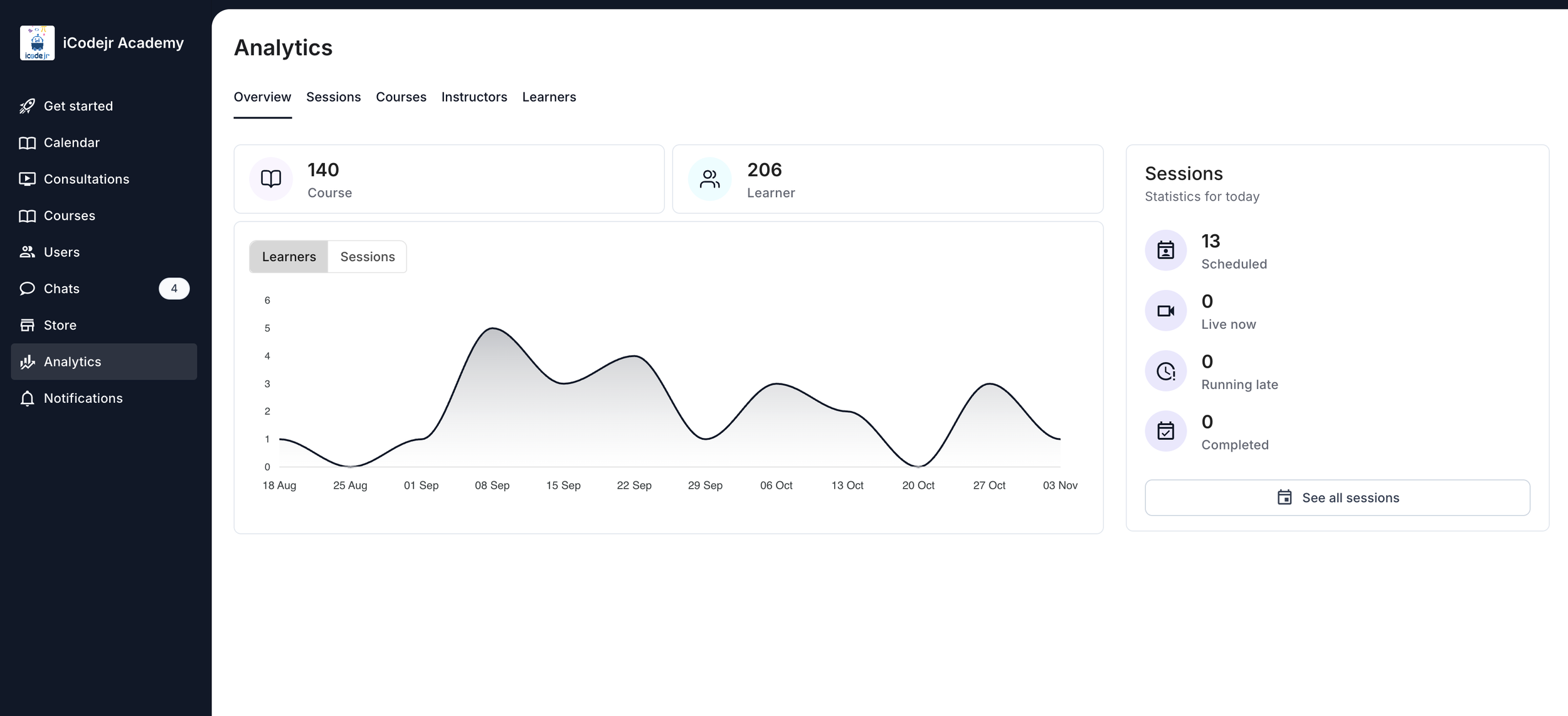
Curriculum That Feels Like Play
iCodejr designs its curriculum around what young students love – not what adults think they should. “Children don’t wake up excited about coding fundamentals,” says Moti. “But they’ll spend three hours building a Roblox game without blinking.”
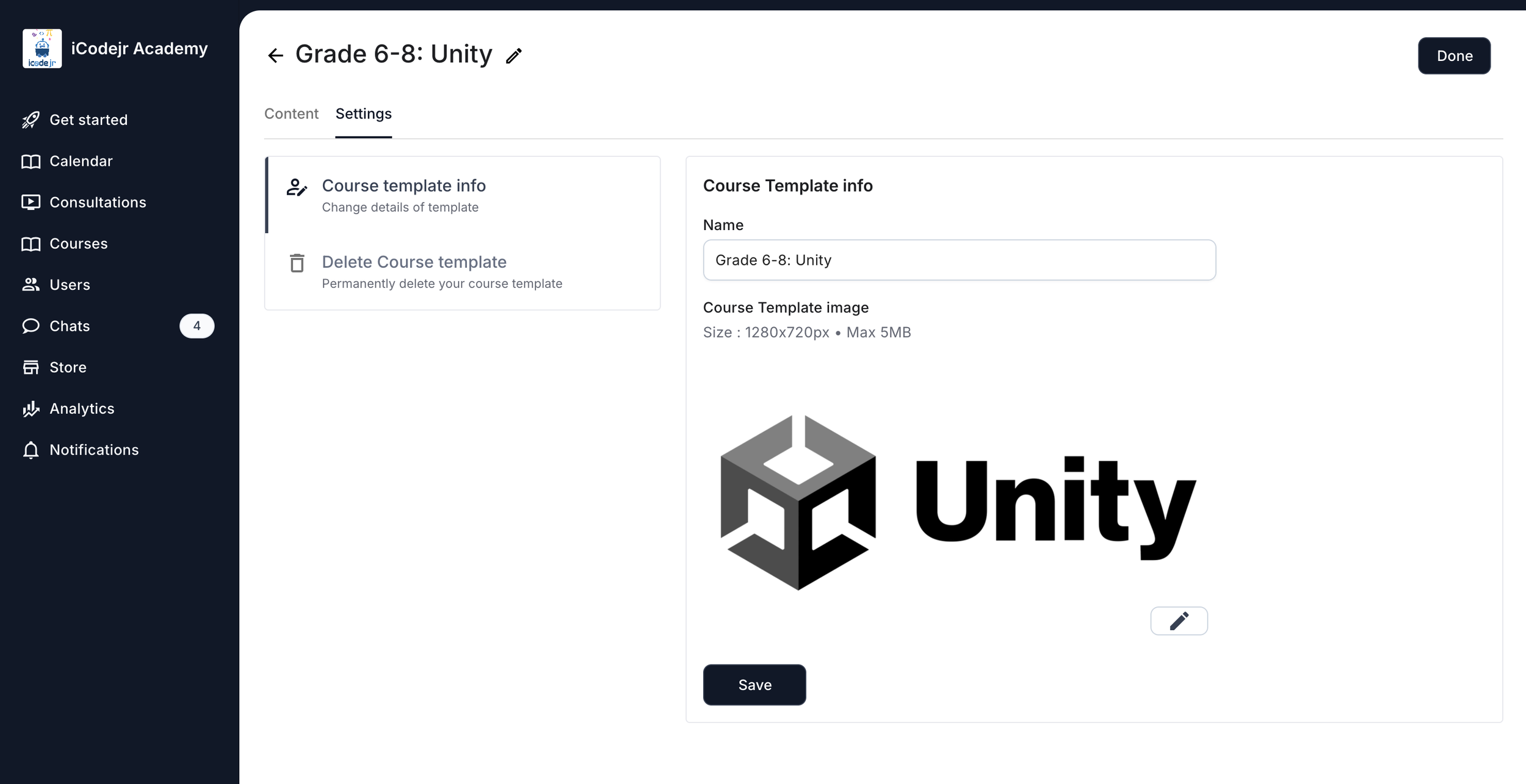
Roblox and Minecraft beat traditional programming every time. When app development modules flopped, iCodejr switched to 3D world-building with Unity, AR, and VR – engagement soared.
For schools, this isn’t just fun; it’s proof. Students aren’t just “using computers” – they’re designing, building and solving problems in digital worlds they care about.
Beginners start with Scratch before moving to Python, a confidence-preserving bridge. Robotics? iCodejr cracked that too with a proprietary kit:
“We wanted hardware learning without hardware headaches,” says Moti. One kit powers 90+ projects, giving schools robotics without costly labs – a game-changer in a region where STEM budgets grow faster than capex.
Operations: From Chaos to Consistency
Like many early-stage education companies, iCodejr began with instructors teaching in their own style. “It was fragmented learning,” Moti admits. “Teacher A taught one way, Teacher B another. Students felt the inconsistency.”
To fix it, the company centralised curriculum development and engineered its own LMS. The platform automates class reminders, tracks progress, stores recordings and uses AI to summarise lessons. Quality no longer depends on whichever instructor happens to be available.
For schools, this consistency is as much a risk tool as a learning tool – it creates an auditable trail of what was taught, when and how, which aligns neatly with the documentation demands of 2025’s more data-driven inspection regimes.
Money With Restraint: Profit First, Venture Later
Unlike those firms chasing top-line growth, iCodejr prioritises profitability. The business targets a 20% post-tax margin and has raised only a single £40k angel cheque. A Pre-Seed round is planned for next year, largely to unlock up to €500,000 in government co-matching grants that require a lead investor.
“We refuse to be valued like a desperate EdTech,” Moti says. “The sector’s at 6–8x revenue right now. Fintech is at 20–25x. We want our revenue strong enough so we don’t dilute more than 10–12%. We’ve earned the right to be disciplined.”
In a global edtech market where valuations have compressed sharply since the pandemic highs – and where many B2C-heavy startups have struggled with high acquisition costs and churn – that discipline is a differentiator.
The Next Move: Selling Schools a Shortcut to Better Ratings
iCodejr’s next move taps into UAE Vision 2030 and the growing weight of innovation in KHDA and SPEA inspections. Many mid-market schools struggle to break past “Good” ratings – a turnkey STEM and AI curriculum could change that.
“When we tell a school, ‘We can help you get closer to Outstanding,’ it changes the whole conversation,” says Moti.
The company is also rolling out internship pathways for real tech-sector exposure and expanding into Maths and English – high-demand subjects that boost revenue without extra acquisition cost. “Once a parent trusts you with coding,” Moti adds, “upselling Maths is not just easier – it’s efficient.”
iCodejr’s edge isn’t just curriculum – it’s distribution. By embedding into timetables, not household budgets, it escapes the churn and price sensitivity of B2C EdTech. With CBSE/IGCSE/IB alignment and a teacher-centred LMS, it positions itself as a STEM infrastructure layer, not a coding club.
In a market where EdTech spend is climbing and competition for parents’ attention is fierce, owning the school timetable – not the Saturday afternoon – is the durable play.
“B2C keeps the lights on,” Moti says. “B2B builds the company