
The Invisible Upgrade - The $17M Infrastructure Bet Behind Your New Phone
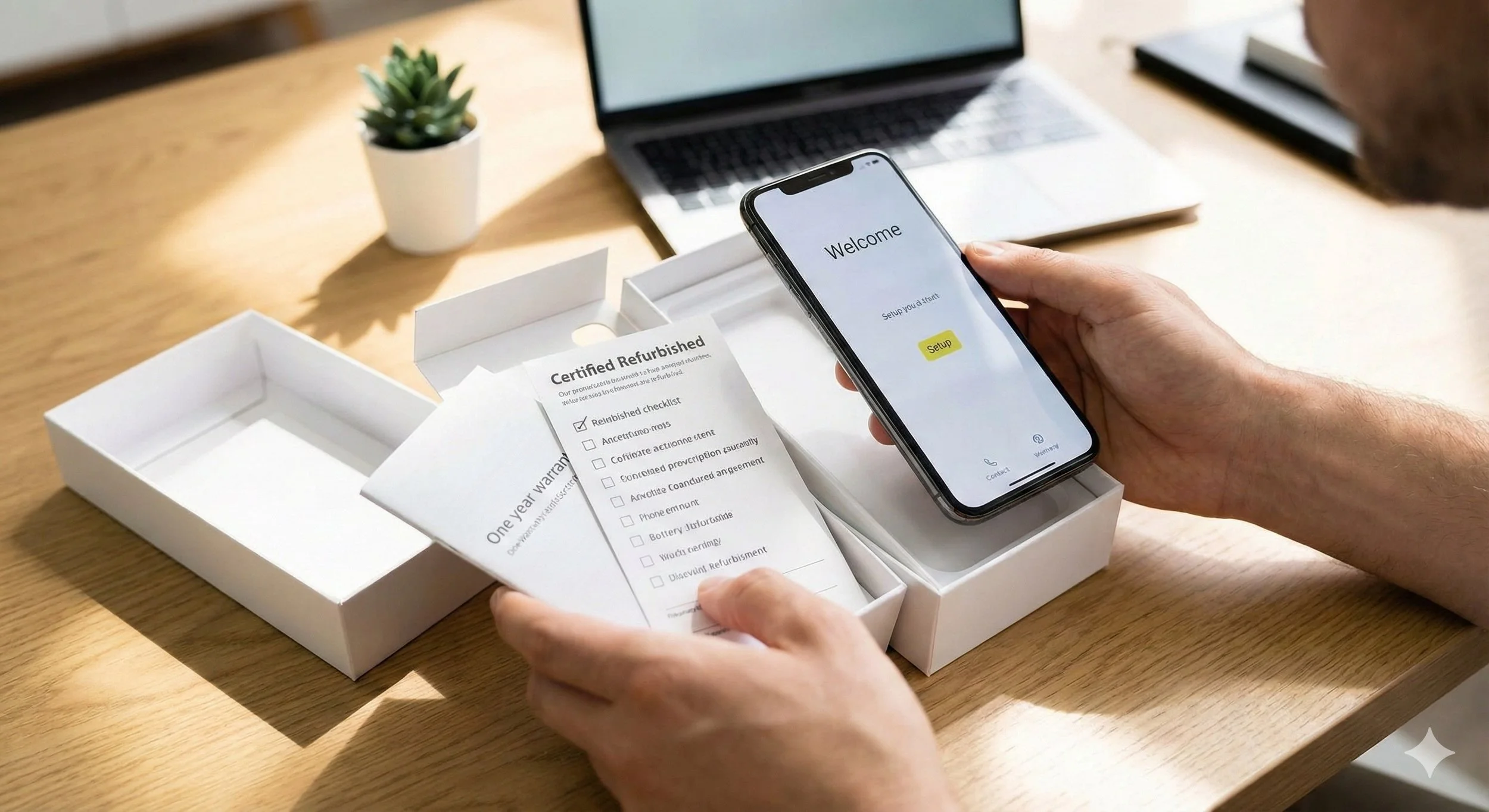
Picture a buyer in Dubai unboxing a phone ordered online. The seal is crisp, the handset powers on instantly, the battery is near full, and the screen is flawless. Inside lies a 12-month warranty slip and a no-questions-asked return policy. At no point does the word used appear in the journey.
Behind the scenes, that device has already lived one life. It has been tested, graded and refurbished, then pushed back into circulation through Revibe, the Dubai based marketplace for refurbished electronics founded in 2022 by Hamza Iraqui and Abdessamad Ben Zakour.
The company’s promise is simple: top quality, certified devices that are “as good as new”, but at a fraction of the price.
Now Revibe has raised $17 million in a new funding round led by Partech, with participation from e and Capital, Burda Principal Investments and EQNX alongside existing investors.
“This new funding is a strong signal of confidence in our mission and model,” the co founders said in the announcement. “We are proving that refurbished does not mean second best – it means better value, verified quality, and a more responsible way to consume technology. With the support of our investors, we will continue expanding internationally and improving every part of the customer experience.”
That unboxing moment on a kitchen counter is the outcome of a problem the founders first described in 2022. “When we founded Revibe in 2022, we saw that in the MENA and adjacent emerging market regions, there was a large supply of devices and a growing demand for affordable tech – but no trusted, quality controlled platform to bridge the two at scale,” Iraqui says.
“We believed that consumers should be able to buy carefully refurbished electronics, smartphones, laptops, at a fraction of new device prices without compromising on reliability, warranty, or peace of mind. That insight became the foundation of Revibe’s mission and model.”
From there, the work of building the company has been about turning that insight into process: a strict 50 point inspection for every device, transparent grading so “excellent” and “very good” actually mean something to buyers, a one year warranty and returns as standard, and a customer experience that feels like buying new. The fresh capital is aimed at making that invisible second life – and that feeling of “new” – repeatable in more markets, for more categories of electronics.
This is infrastructure money, not app money
Globally, the tide is moving in Revibe’s direction. A IMARC report suggests that the market for refurbished and used mobile phones was worth about $69 billion in 2024 and is projected to reach more than $130 billion by 2033.
Research by CCS Insight shows that the organised second-hand smartphone market grew faster than the primary market in 2024, as more buyers chose high-quality pre-owned devices over brand-new ones.
The Middle East and Africa are following the same arc from a different starting point. Mordor Intelligence expects the region’s refurbished and used mobile phones market to grow from around 19 and a half million units by the end of 2025 to more than 23 million units by 2030.
This is true, even as the overall smartphone market in the region rises from about 31 billion dollars in 2025 to more than 48 billion dollars by 2030. In other words: more people need capable phones, flagship prices keep climbing, and there is growing pressure to reduce e-waste.
Revibe was built around that premise. “When we founded Revibe in 2022, we saw that in the MENA and adjacent emerging-market regions, there was a large supply of devices and a growing demand for affordable tech – but no trusted, quality-controlled platform to bridge the two at scale,” says Iraqui.
The founding duo - Iraqui and Zakour believed that consumers should be able to buy carefully refurbished electronics at a fraction of new-device prices without compromising on reliability, warranty or peace of mind.
“That insight became the foundation of Revibe’s mission and model,” adds Iraqui.
The new capital is aimed squarely at hardening that foundation. “The $17 million round allows us to significantly scale up refurbishment capacity, device quality, and customer-experience infrastructure,” he says.
“It also enables a faster expansion into new markets across the Gulf region and emerging economies, by supporting logistics, operations and international launch costs.”
This is infrastructure money: testing labs, grading standards, warranties, logistics and UX – the invisible plumbing that has to work before refurbished can feel as predictable as buying new.
The rails: turning second hand into a boring utility
However, in most of the region, “used phone” still conjures images of informal shops and anonymous classifieds. You pay in cash, hope the battery does not die in a month, and have no real recourse if it does. Revibe is trying to replace that gamble with something almost boring in its reliability.
“The biggest gap we address is trust and standardisation,” Iraqui says. He explains many refurbished or second hand devices in our region come from informal refurbishers or classified resale – that means inconsistent quality, no warranty, and a high perceived risk for buyers.
“What Revibe offers instead is a certified marketplace: every device undergoes a 50 point inspection, is graded and sold with a 12 month warranty and return policy. We also deliver a premium online buying experience – transparent grading, secure payments, fast delivery – which helps bridge the gap between used device risk and trusted consumer purchase.”
Those “rails” are deliberately operational rather than cosmetic. “We apply a strict 50 point inspection process to every device before listing. That covers all major aspects, from cosmetic condition to battery, screen, functionality and overall performance,” he said.
On Revibe, the devices are graded transparently, buyers know what to expect, and every device comes with a 12 month warranty and return policy, giving consumers confidence even in markets where refurbished electronics are less established.
With this round, Revibe is widening what can travel across that infrastructure. “We are already moving into tablets, smartwatches, health devices and TVs,” Iraqui says. “Over the next two years, the plan is to broaden significantly, potentially including home appliances and sound systems – basically aiming to offer anything electronic that can be refurbished to high standards.”
The ambition is to make these rails something telcos, retailers and even manufacturers can plug into, rather than each one building their own small refurbishment engine.
The cap table as signal: what telcos, VCs and media are really funding
Who is backing those rails says as much as the business model itself.
“Revibe is building the leading refurbished electronics platform for emerging markets,” said Cyril Collon, General Partner at Partech. “With Egypt as its operational engine and Dubai as its strategic hub, the team’s data driven execution and clear vision set them apart. We are proud to back them in shaping the future of sustainable tech across Africa, the Middle East and beyond.”
For Revibe, Partech fits into a deliberate playbook. “We chose Partech because of their deep track record investing in high growth marketplaces across emerging markets, especially in Africa and the Middle East, which aligns tightly with our cross border Gulf and wider MENA strategy,” Iraqui said. “Their backing brings not just capital, but strategic support and credibility as we scale operations and expand internationally.”
Telco-backed e and Capital brings the other half of the equation: distribution, billing and the upgrade paths that already define how many people in the region acquire phones. “With the support of e& Capital, Burda Principal Investments and EQNX, we gain both financial firepower and regional and international network reach, which helps us overcome logistic, regulatory and market entry hurdles faster than we could alone,” Iraqui says.
He explains e& Capital gives the team a great opportunity to work on strategic fit with the leading telco player of the region with whom Revibe’s visions on sustainability and circular economy are aligned.
Media-backed Burda Principal Investments adds consumer-brand and storytelling clout, making it easier to shift how refurbished is perceived. Together, the investors are not just backing a marketplace.
They are underwriting a refurbishment infrastructure layer that telcos, retailers and manufacturers can lean on as the global secondary-device market keeps outgrowing the primary one.
Redefining “new” in emerging markets
Since launch, Revibe has been watching behaviour catch up to this thesis. “We have seen a clear change in how consumers across the Gulf and Africa perceive and purchase refurbished electronics,” Iraqui says.
Demand has been steadily increasing, driven by rising price sensitivity, stronger interest in sustainability and growing confidence in high quality refurbished alternatives. The result is that refurbished is no longer seen only as a backup option – it is becoming a mainstream, intentional choice for more consumers across the region.
Sustainability is part of that shift. “Sustainability is a central pillar of Revibe’s mission,” he adds. “We position refurbished electronics as a smarter and more sustainable way to buy tech. By extending the life of electronic devices, offering them at lower prices and avoiding unnecessary manufacturing of new devices, we aim to reduce electronic waste and environmental impact.”
Loop back to that anonymous box on a doorstep in Dubai, Riyadh or Lagos. If the infrastructure and investor thesis behind this $17 million round plays out, the most striking thing about the device inside will be how unremarkable it feels.
It will switch on, work flawlessly and sit on a payment plan like any other new phone. The difference is that it will not be newly manufactured – just newly yours, riding on second-life infrastructure you never have to think about.